
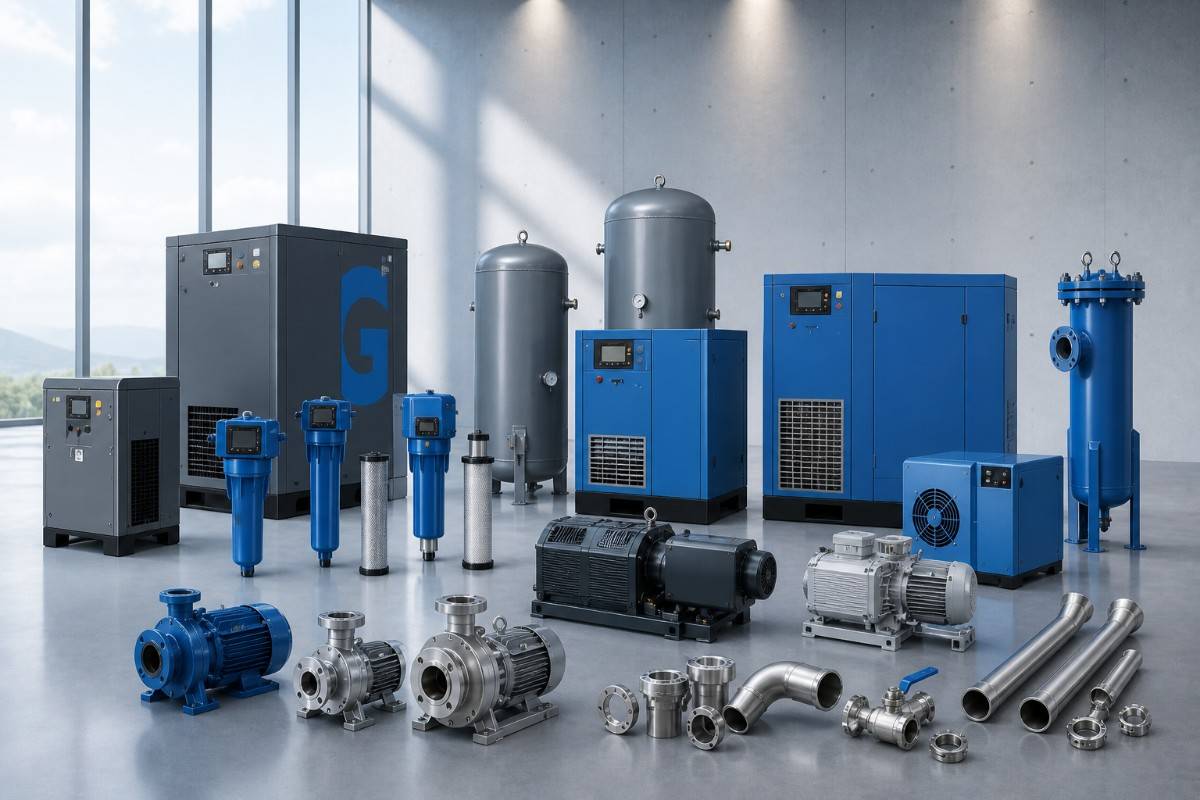
These compressors have been trusted in industries for decades because they are reliable, practical, and capable of handling demanding applications. Whether you run a garage, manufacturing unit, or service workshop, a piston compressor often becomes the backbone of your daily operations.
At Times Marketing, we’ve noticed that many people buy compressors based only on tank size or horsepower while ignoring airflow requirements and operating conditions. Those details usually decide how well the machine performs over time.
What Is a Reciprocating Piston Compressor?
A reciprocating piston compressor is a type of air compressor that uses pistons driven by a crankshaft to compress air and store it under pressure.
The working principle is surprisingly simple:
- Air enters the cylinder through an intake valve.
- The piston moves downward and pulls air inside.
- The piston moves upward and compresses the air.
- Compressed air is pushed into a storage tank.
Think of it like a bicycle pump working continuously, only on a much larger and more powerful industrial scale.
These compressors are widely used because they are durable, efficient for intermittent operations, and capable of producing high-pressure air.
Why Reciprocating Piston Compressors Are Still Popular
Technology keeps evolving, yet piston compressors remain widely used across industries.
Why?
Because they combine:
- Reliable performance
- Simple operation
- Strong pressure output
- Easy maintenance
- Long operational life
In my experience, workshops and medium-scale industrial units often prefer piston compressors because technicians are already familiar with their operation and servicing.
Suitable for Multiple Applications
A reciprocating piston compressor works well in:
- Automotive workshops
- Fabrication units
- Construction sites
- Manufacturing plants
- Spray painting systems
- Pneumatic tool operations
- Packaging industries
That flexibility keeps them relevant even as newer compressor technologies enter the market.
How a Reciprocating Piston Compressor Works
Understanding the working process helps you choose the right machine for your needs.
Intake Stage
The intake valve opens as the piston moves downward, allowing atmospheric air into the cylinder.
Compression Stage
As the piston moves upward, the air gets compressed into a smaller space.
Discharge Stage
The compressed air exits through the discharge valve and enters the storage tank.
This cycle repeats continuously during operation.
When I tried explaining compressor systems to first-time buyers, comparing the mechanism to a car engine helped them understand it quickly because both systems rely heavily on piston movement.
Types of Reciprocating Piston Compressors
Not all piston compressors are identical. Different applications require different configurations.
Single-Stage Compressors
Single-stage compressors compress air in one piston stroke.
Best suited for:
- Small workshops
- Household applications
- Light industrial work
They are commonly used where moderate pressure levels are sufficient.
Two-Stage Compressors
Two-stage systems compress air in multiple stages for higher pressure output.
Ideal for:
- Manufacturing plants
- Industrial operations
- Heavy-duty pneumatic systems
These compressors are more efficient for demanding industrial environments.
Oil-Lubricated Compressors
These systems use oil lubrication to reduce friction and improve durability.
They are commonly found in:
- Industrial workshops
- Factories
- Automotive facilities
Oil-Free Compressors
Oil-free compressors are designed for environments where clean air is critical.
Applications include:
- Medical industries
- Food processing
- Laboratories
- Pharmaceutical production
Advantages of Using a Reciprocating Piston Compressor
High Pressure Capability
Piston compressors are known for delivering strong air pressure, making them ideal for heavy-duty tools and machinery.
Durable Construction
These systems are built to withstand demanding industrial environments.
Easy Maintenance
Compared to some advanced compressor systems, piston compressors are relatively simple to service.
At Times Marketing, many customers appreciate how easy routine maintenance becomes with reciprocating systems because spare parts are widely available.
Cost-Effective for Intermittent Use
Piston compressors work efficiently in applications where air demand fluctuates rather than running continuously all day.
Compact Design
Many models fit easily into workshops with limited space.
Industries That Commonly Use Reciprocating Piston Compressors
A reciprocating piston compressor supports a wide range of industries because of its adaptability.
Automotive Workshops
These compressors power:
- Pneumatic wrenches
- Spray painting systems
- Tire inflation equipment
Manufacturing Plants
Compressed air supports automation systems and production equipment.
Construction Industry
Portable piston compressors are widely used on construction sites for drilling and pneumatic tools.
Textile Industry
Compressed air assists in machinery operations and cleaning processes.
Food Processing
Oil-free piston compressors help maintain air purity standards in food production environments.
Important Factors to Consider Before Buying
Many buyers rush the decision and regret it later.
Here are the factors that genuinely matter.
Airflow Capacity
The compressor must supply enough airflow for all connected tools and equipment.
Pressure Requirements
Different applications require different pressure levels.
For example:
- Spray painting requires stable airflow
- Heavy pneumatic tools need higher pressure
Duty Cycle
Some compressors are designed for intermittent use, while others handle extended operating periods.
Noise Levels
Older piston compressors can generate significant noise during operation.
I’ve noticed that businesses working in enclosed environments increasingly prefer quieter models because noise affects employee comfort more than expected.
Maintenance Accessibility
Easy servicing and spare part availability save significant time during repairs.
Common Problems with Reciprocating Piston Compressors
Even reliable compressors can develop issues without proper care.
Overheating
Poor ventilation or continuous overloading often causes overheating.
Air Leaks
Leaks reduce efficiency and increase energy consumption.
Excessive Noise
Loose components or worn internal parts can create abnormal noise.
Moisture Build-Up
Moisture inside the tank may damage equipment and reduce performance.
Reduced Air Pressure
Dirty filters or worn piston rings often affect airflow output.
According to a 2025 industrial maintenance survey by Mechanical Systems India, nearly 35% of compressor failures are linked to neglected preventive maintenance. That statistic says a lot about how important regular servicing really is.
Maintenance Tips for Long Compressor Life
Proper maintenance dramatically improves compressor performance and lifespan.
Clean Filters Regularly
Dust-clogged filters force the compressor to work harder.
Check Oil Levels
Oil-lubricated systems require routine lubrication monitoring.
Drain Moisture from Tanks
Moisture accumulation can cause corrosion and damage internal components.
Inspect Belts and Connections
Loose belts reduce operational efficiency.
Schedule Professional Servicing
Routine inspections help identify problems before major failures occur.
In my experience, businesses that follow preventive maintenance schedules usually face far fewer breakdowns and unexpected downtime.
Why Businesses Continue Choosing Piston Compressors
Despite newer technologies, piston compressors remain popular because they are practical and dependable.
Businesses appreciate:
- Familiar technology
- Strong pressure delivery
- Long service life
- Easy repair processes
- Reliable industrial performance
At Times Marketing, many industrial clients still prefer piston compressors for workshop operations because they balance performance and simplicity extremely well.
Emerging Trends in Compressor Technology
The compressor industry continues evolving with smarter and more efficient systems.
Energy-Efficient Motors
Modern compressors are designed to reduce electricity consumption.
Noise Reduction Improvements
Newer systems operate much more quietly than older models.
Smart Monitoring Systems
Digital monitoring now helps track:
- Pressure levels
- Maintenance schedules
- Energy usage
- Operational efficiency
Improved Durability
Manufacturers continue improving component strength for longer service life.
Final Thoughts
A reliable reciprocating piston compressor does more than generate compressed air. It supports productivity, reduces operational interruptions, and keeps industrial systems running smoothly day after day.
Choosing the right compressor means understanding your airflow requirements, operating conditions, and maintenance expectations from the beginning. The right machine quietly supports your operations for years without becoming a constant source of problems.
That reliability is exactly why piston compressors continue earning trust across industries worldwide.