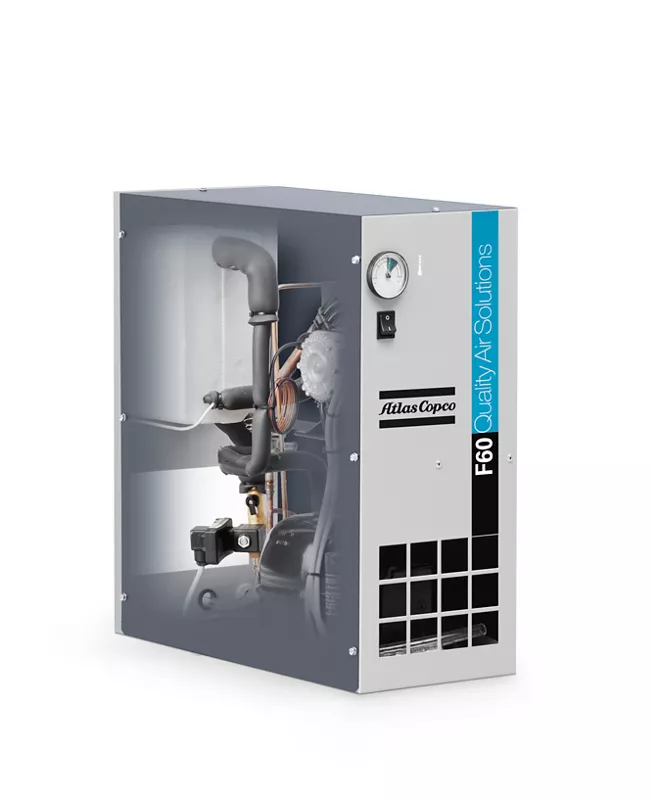
Our complete range of refrigerated air dryers
.png)
Our refrigerated dryers offer a reliable, economic and simple solution to avoid condensation and thereby corrosion in your systems
Our ranges of refrigerant dryers require a minimum of maintenance and hence can deliver a maximum of uptime. Reducing your production costs through less downtime
Our refrigerated air dryers follow the plug-and-play concept, meaning you can easily install your unit
The energy efficiency depends on the internal pressure drop and the electrical power consumed by the dryer.
The internal pressure drop is the difference between the
pressure of the compressed air at the dryer inlet and outlet
pipe.
The lower the internal pressure drop of the
refrigerated dryer, the lower the pressure you need to achieve
with the air compressor. And the less energy the compressor
consumes.
Our refrigerant dryers are designed to minimize pressure drop and have therefore the lowest energy consumption.
Maximize your energy savings from the first minute of operation with
Refrigerant dryers are the most commonly used dryers in the
industry and consist of an air-to-air heat exchanger and an
air-to-refrigerant heat exchanger. The heat exchangers remove
moisture from your compressed air by condensation of water
within.This is essential to protect compressed air systems and
every piece of equipment fed by compressed air from the harmful
effects of moisture.
The most important criterion is
to keep the relative humidity of compressed air below 50%.
Both air-cooled and water-cooled refrigerant dryers are
available. Basically, the dryers cool down the warm wet air
coming from the compressor, When the temperature of compressed
air reduces, moisture condenses and is drained from the
compressed air with the help of a high-efficiency water
separator.
After that, compressed air is reheated to around room temperature so that condensation does not form on the outside of the pipe system. This heat exchange between ingoing and outgoing compressed air also reduces the temperature of the incoming compressed air, and as such reduces the required cooling capacity of the refrigerant circuit.