
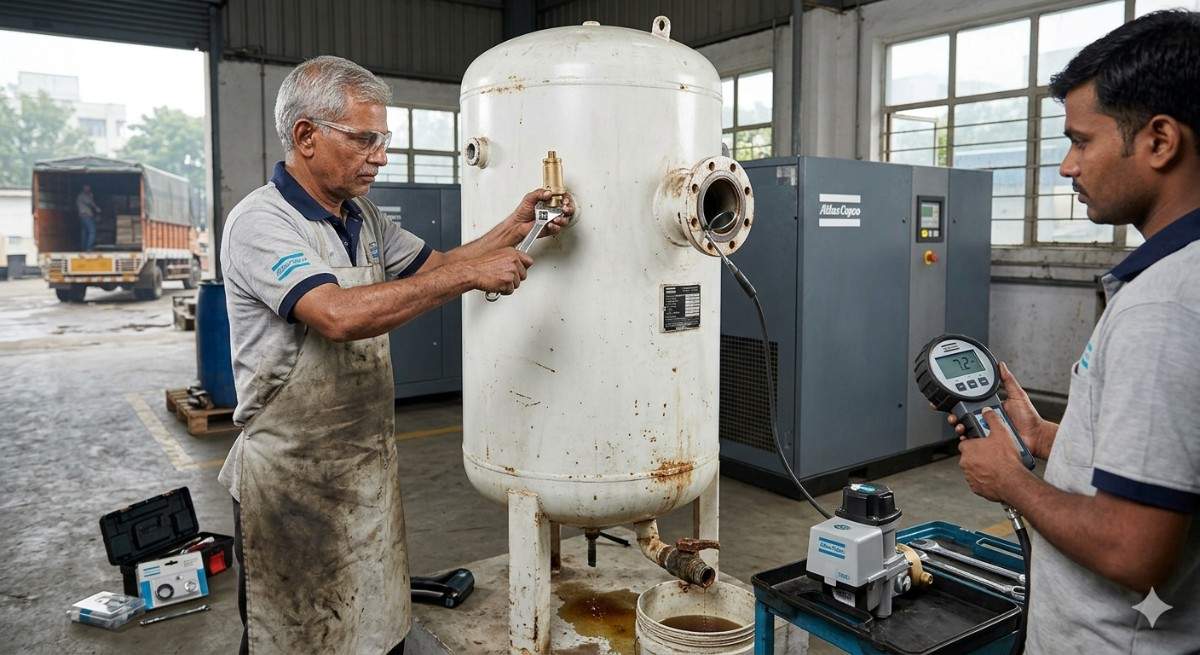
It was a regular Monday morning at a manufacturing plant in Ahmedabad. The compressor was running, the shift had just started, and then without warning, production came to a complete halt.
The culprit was not the compressor. It was the air receiver tank sitting quietly in the corner that nobody had inspected in over two years.
A corroded drain valve had failed overnight. Moisture had built up inside the tank. Pressure had dropped and the entire pneumatic system had gone offline.
Two hours of downtime. A full shift disrupted. And all of it was completely preventable.
Air receiver tanks are one of the most hardworking and most neglected components in any compressed air system. This guide covers the most common problems that occur with air receiver tanks in Indian industrial settings and exactly what you need to do to fix them fast and prevent them from happening again.
What Air Receiver Tanks Actually Do and Why They Matter So Much
Before diving into problems and solutions it helps to understand what air receiver tanks are actually doing inside your system.
An air receiver tank stores compressed air generated by your compressor and releases it steadily to your downstream equipment. It acts as a buffer between the compressor and the demand side of your system.
It smooths out pressure fluctuations, reduces the load on your compressor by preventing it from short cycling, removes some moisture from the air through natural condensation, and provides an emergency air reserve when demand suddenly spikes.
Without a properly functioning air receiver tank your compressor works harder, your pressure becomes inconsistent, your tools perform poorly, and your entire system becomes less efficient and more expensive to run.
When air receiver tanks develop problems the impact is felt immediately across the entire compressed air system and every machine connected to it.
Problem 1: Internal Corrosion and Rust Buildup
This is by far the most common problem with air receiver tanks across Indian industries and it is also the most dangerous if left unaddressed.
Every time your compressor draws in ambient air it also pulls in moisture. Even with a good air dryer in place some condensation forms inside the tank as the compressed air cools. Over time this moisture accumulates at the bottom of the tank and begins corroding the internal walls.
In India the problem is made worse by high ambient humidity levels especially during monsoon season. Plants in coastal cities like Mumbai, Chennai, and Kochi see significantly faster internal corrosion rates than facilities in drier inland locations.
How to identify it:
You will notice rust-coloured water coming out of the drain valve during regular draining. In advanced cases you may see visible rust streaks on the external surface of the tank near the bottom. A professional inspection using ultrasonic thickness testing will reveal exactly how much wall thinning has occurred internally.
How to fix it:
For minor surface corrosion increase your drain frequency immediately and ensure your automatic drain valve is functioning correctly. Have the tank inspected by a qualified engineer to assess internal wall thickness.
For significant corrosion the tank may need to be decommissioned and replaced. Running a corroded air receiver tank beyond its safe limits is a serious safety risk. In India the IBR regulations require periodic inspection of pressure vessels and a corroded tank that fails inspection must be replaced without exception.
How to prevent it:
Drain the tank completely every day without fail. Install a reliable automatic drain valve so condensate is removed consistently even when operators are busy. Pair your system with a quality refrigerated air dryer to reduce the moisture load entering the tank in the first place.
Problem 2: Faulty or Blocked Drain Valve
The drain valve is the smallest component on your air receiver tank and the one that causes the most problems when it is ignored.
Its job is simple. It allows accumulated condensate to drain out of the tank on a regular basis. When it fails or becomes blocked that condensate stays inside the tank and accelerates corrosion while also contaminating your compressed air with moisture.
How to identify it:
Manual drain valves that have not been operated for extended periods often seize due to rust and mineral deposits. Automatic drain valves can fail in the open position causing continuous air loss or in the closed position causing condensate to build up. If your air quality has suddenly worsened or you hear a constant hiss of air escaping from the drain area your drain valve needs immediate attention.
How to fix it:
A seized manual drain valve can sometimes be freed with penetrating oil and careful operation but in most cases replacement is the safer and more practical option. Drain valves are inexpensive components and replacing a faulty valve immediately is always better than risking tank corrosion or air quality problems.
If you are still using a manual drain valve this is the right time to upgrade to a timer-operated or zero-loss automatic drain valve. This eliminates human error from your maintenance routine entirely.
How to prevent it:
Include drain valve inspection and operation as a daily checklist item for your maintenance team. For automatic drain valves check operation weekly and replace the valve at the first sign of malfunction.
Problem 3: Pressure Fluctuations and Inconsistent Air Supply
If your downstream tools and machines are experiencing inconsistent pressure or your compressor is short cycling frequently your air receiver tank could be the source of the problem.
Short cycling happens when the compressor switches on and off too rapidly. This places enormous stress on the compressor motor and significantly shortens its operational life. It also causes pressure fluctuations that affect tool performance and product quality on your production line.
How to identify it:
Your pressure gauge will show rapid swings between cut-in and cut-out pressure. Your compressor will start and stop more frequently than normal. Workers on the floor will report that pneumatic tools feel weaker or inconsistent during operation.
How to fix it:
In many cases the root cause is an undersized air receiver tank relative to your compressor capacity and your system demand. The standard recommendation is a minimum tank volume of six to ten times the compressor's free air delivery per minute.
If your tank is correctly sized check the pressure switch settings on your compressor. Incorrect differential settings between cut-in and cut-out pressure can also cause short cycling. Have your settings reviewed by a qualified engineer.
How to prevent it:
When expanding your production capacity or adding new pneumatic equipment always reassess whether your existing air receiver tank capacity is still adequate. Adding a secondary receiver tank is often more cost-effective than replacing the compressor entirely.
Problem 4: Safety Valve Lifting or Leaking
The safety relief valve on your air receiver tank is your last line of defence against overpressure. When it lifts unexpectedly or leaks continuously it signals a problem that must be addressed immediately.
How to identify it:
You will hear a distinct hissing or whistling sound from the safety valve area. In some cases you may see the valve physically open and release air. A safety valve that lifts frequently indicates the system is regularly reaching or exceeding its maximum allowable working pressure.
How to fix it:
First check your compressor pressure switch settings. If the cut-out pressure is set too close to or above the safety valve set pressure the valve will lift during normal operation. Adjust the cut-out pressure to provide adequate margin below the safety valve rating.
If the safety valve itself is leaking after being lifted it may need to be replaced. Safety valves are designed to seal perfectly after operation and a valve that continues to leak has been compromised and must not remain in service.
Never attempt to block, tie down, or tamper with a safety relief valve under any circumstances. This is not just bad practice. It is a serious safety violation that can result in catastrophic tank failure.
How to prevent it:
Test your safety valve manually at least once every three months by briefly lifting the test lever. This confirms the valve is not seized and will operate correctly in an emergency. Replace safety valves at the intervals recommended by the manufacturer regardless of whether they appear to be functioning normally.
Problem 5: External Corrosion and Paint Degradation
While internal corrosion is the more dangerous problem external corrosion should not be ignored either. Tanks installed in outdoor locations, damp compressor rooms, or near chemical processing areas are particularly vulnerable.
How to identify it:
Visible rust patches on the external surface, bubbling or flaking paint, and corrosion around weld seams and fittings are all clear signs of external degradation that need attention.
How to fix it:
Surface treat affected areas by removing rust mechanically and applying a suitable industrial primer and topcoat. Pay particular attention to the bottom of the tank and any areas where moisture can collect. For tanks with significant external corrosion around weld seams have the tank structurally assessed before continuing operation.
How to prevent it:
Keep your compressor room well ventilated and as dry as possible. Inspect the external surface of your air receiver tank at least twice a year and touch up the protective coating before corrosion has a chance to penetrate deeply.
A Practical Maintenance Schedule for Air Receiver Tanks in Indian Industries
Consistent maintenance is the single most effective way to prevent all of the problems described above. Here is a simple maintenance schedule that every Indian industrial facility should follow.
Daily Tasks
Drain condensate from the tank manually if an automatic drain is not installed. Check the pressure gauge reading and confirm it is within normal operating range. Listen for any unusual sounds around the tank including hissing, gurgling, or vibration.
Weekly Tasks
Inspect the drain valve for correct operation. Check all external fittings and connections for air leaks using soapy water. Confirm the automatic drain valve is cycling correctly if one is installed.
Monthly Tasks
Inspect the external surface of the tank for signs of corrosion or paint degradation. Test the safety relief valve by briefly operating the test lever. Check pressure switch settings and compare actual cut-in and cut-out pressures against specified values.
Annual Tasks
Arrange a professional inspection of the tank including ultrasonic wall thickness testing to assess internal corrosion. Review and replace the safety valve if it has reached its recommended service interval. Check all gaskets, flanges, and connections for signs of wear or leakage.
Frequently Asked Questions About Air Receiver Tanks
Q1. How long do air receiver tanks last in Indian industrial conditions?
A well-maintained air receiver tank can last 15 to 20 years or more in normal industrial conditions. However tanks exposed to high humidity, corrosive environments, or poor maintenance practices may need replacement much sooner. Regular inspection is the only reliable way to determine the actual condition and remaining service life of your tank.
Q2. How do I know what size air receiver tank my system needs?
The general recommendation is a tank capacity of six to ten times your compressor's free air delivery per minute. For example if your compressor delivers 20 CFM your receiver tank should be between 120 and 200 litres at minimum. A qualified supplier can calculate the exact recommended size based on your specific compressor output and system demand profile.
Q3. Is it safe to weld a repair on a corroded air receiver tank?
Welding repairs on pressure vessels must only be carried out by certified welders following proper procedures and with appropriate post-weld inspection. In India pressure vessel repairs are governed by IBR regulations. An improperly repaired tank is a serious safety hazard. In many cases replacement is the safer and more cost-effective option compared to repair.
Q4. Why does my air receiver tank sweat on the outside?
External sweating or condensation on the tank surface is caused by the temperature difference between the cold compressed air inside the tank and the warm humid air outside. This is common during monsoon season in India. While it does not indicate a fault it does mean moisture is present and your external surface needs to be protected from corrosion with proper coating and regular inspection.
Q5. Can I increase the pressure setting on my air receiver tank to get more performance?
Never operate an air receiver tank above its maximum allowable working pressure which is stamped on the nameplate. Increasing pressure settings beyond this rating is extremely dangerous and constitutes a serious violation of pressure vessel safety regulations in India. If your current pressure is insufficient for your application consult a qualified engineer about upgrading to an appropriately rated tank.
Q6. How often should the IBR inspection of my air receiver tank be carried out?
Under IBR regulations in India pressure vessels including air receiver tanks must be inspected by an authorised IBR inspector at prescribed intervals. The frequency depends on the tank classification and operating conditions but is typically required every one to two years. Always maintain your IBR certification documents and schedule inspections in advance to avoid compliance issues.
Why Times Marketing Is the Right Partner for Your Air Receiver Tanks Needs
At Times Marketing we supply industrial-grade air receiver tanks built to meet IBR standards and designed for the demanding conditions of Indian industry.
Whether you need a replacement tank, an additional receiver to expand your system capacity, or expert guidance on the right specification for your application our team is ready to help.
We also supply complete compressed air system components including compressors, air dryers, filters, and automatic drain valves so you can build or upgrade your entire system through a single trusted partner.
Our technical team is available to assess your existing setup, identify potential problems before they cause downtime, and recommend the right solutions for your specific industry and operating environment.
Conclusion
Air receiver tanks are silent workhorses. They rarely demand attention until something goes wrong. And when something does go wrong the impact on your production is immediate and costly.
The good news is that almost every common air receiver tank problem is preventable with a simple and consistent maintenance routine.
Drain regularly, inspect often, replace worn components promptly, and schedule professional inspections annually. These straightforward steps will keep your air receiver tanks performing reliably for many years and protect the entire compressed air investment your business depends on.
Times Marketing is here to support you with the right products, the right guidance, and the right service when you need it most. Contact our team today to discuss your air receiver tank requirements or to schedule an assessment of your existing compressed air system.