
Introduction: Why Moisture in Compressed Air is a Serious Problem
In many Indian industries, compressed air is considered the fourth utility after electricity, water, and gas. Yet, one major issue often goes unnoticed until it causes damage. Moisture.
If compressed air contains moisture, it can lead to corrosion in pipelines, contamination in products, and failure of expensive machinery. This is where Desiccant Air Dryers in India play a crucial role.
From manufacturing plants in Pune to pharmaceutical units in Hyderabad, businesses rely on desiccant dryers to ensure clean, dry, and reliable compressed air. But not all dryers are the same. Understanding the types and their applications can help you make a smarter investment.
Understanding Desiccant Air Dryers and How They Work
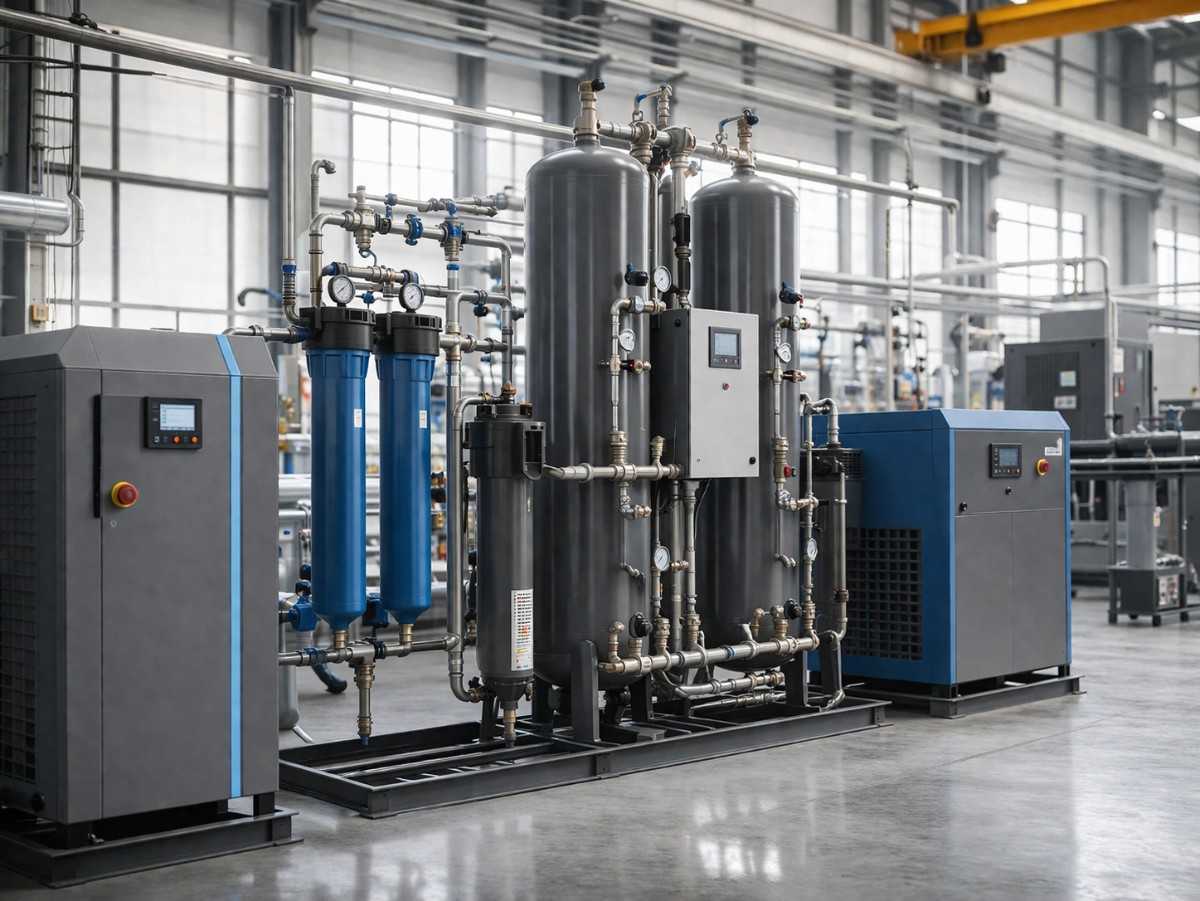
Desiccant air dryers remove moisture from compressed air using a process called adsorption. Unlike refrigeration dryers, they use special materials that attract and hold water vapor.
How the process works
- Compressed air enters the dryer
- Moisture is absorbed by desiccant material such as activated alumina or silica gel
- Dry air exits the system
- The desiccant is regenerated for reuse
This process ensures extremely low dew points, making these dryers ideal for critical industrial applications.
Why Indian Industries Prefer Desiccant Air Dryers
Desiccant Air Dryers in India are widely used because they deliver consistent performance even in demanding environments.
Key advantages
- Achieve very low dew points suitable for sensitive applications
- Prevent corrosion and rust in pipelines
- Improve product quality in manufacturing
- Reduce maintenance costs of pneumatic equipment
- Ensure uninterrupted operations in humid conditions
Given India’s varying climate conditions, especially in coastal and monsoon regions, these dryers are often a necessity rather than a luxury.
Types of Desiccant Air Dryers in India
Different industries require different drying technologies. Let us explore the most common types used across Indian industrial sectors.
Heatless Desiccant Air Dryers
This is one of the most commonly used types of Desiccant Air Dryers in India.
How it works
- Uses a portion of dry compressed air to regenerate the desiccant
- Operates with two towers switching between drying and regeneration
Best suited for
- Small to medium manufacturing units
- Workshops and fabrication plants
- Applications where simplicity is preferred
Key benefits
- Simple design and easy maintenance
- No external heat source required
- Reliable performance in most environments
However, it consumes more compressed air during regeneration, which may impact energy efficiency in large-scale operations.
Heated Desiccant Air Dryers
These dryers use an external heat source to regenerate the desiccant, reducing air loss.
How it works
- Uses heaters to remove moisture from the desiccant
- Requires less compressed air for regeneration
Ideal applications
- Medium to large industrial plants
- Automotive manufacturing units
- Engineering and heavy machinery industries
Key benefits
- Lower compressed air consumption
- Better energy efficiency compared to heatless dryers
- Suitable for continuous operations
This type is often preferred by industries looking for long-term cost efficiency.
Blower Purge Desiccant Air Dryers
This advanced type is gaining popularity in India due to its energy-saving capabilities.
How it works
- Uses ambient air through a blower for regeneration
- Eliminates the need for compressed air during regeneration
Where it is used
- Large manufacturing plants
- Pharmaceutical and food processing industries
- Power plants and petrochemical sectors
Key benefits
- Significant energy savings
- Reduced load on compressors
- Ideal for high-volume applications
Although the initial setup is more complex, the operational efficiency makes it a preferred choice for large industries.
Heat of Compression Desiccant Air Dryers
These dryers utilize the heat generated during air compression.
How it works
- Captures heat from the compressor
- Uses it for desiccant regeneration
Suitable for
- Industries with oil-free compressors
- Continuous high-load operations
- Large-scale production units
Key benefits
- Minimal additional energy requirement
- Highly efficient for specific setups
- Reduced operational costs
This type is ideal when integrated properly with the compressor system.
Industry Applications of Desiccant Air Dryers in India
Desiccant Air Dryers in India are used across multiple industries where air quality directly impacts productivity and safety.
Common applications
- Pharmaceutical industry
Ensures contamination-free air for drug manufacturing - Food and beverage sector
Prevents moisture from affecting product quality - Automotive manufacturing
Maintains precision in painting and assembly processes - Textile industry
Avoids fabric damage caused by moisture - Electronics manufacturing
Protects sensitive components from humidity - Construction and infrastructure
Supports pneumatic tools and equipment
Each application demands a specific type of dryer based on air quality requirements.
How to Choose the Right Desiccant Air Dryer
Selecting the right system depends on several practical factors, especially for Indian industrial conditions.
Key factors to consider
- Required dew point
Lower dew points are needed for critical applications - Air flow capacity
Match the dryer capacity with compressor output - Energy efficiency
Choose systems that reduce long-term power consumption - Maintenance requirements
Opt for models that are easy to service - Operating environment
Consider humidity levels and ambient temperature - Type of industry
Different industries have different purity standards
While selecting a dryer, it is useful to explore related equipment such as air compressors, air receiver tanks, and filtration systems offered by Times Marketing to build a complete compressed air solution.
Common Mistakes to Avoid
Many businesses invest in dryers but fail to optimize their performance due to common errors.
Avoid these mistakes
- Choosing a dryer without understanding dew point requirements
- Ignoring maintenance schedules
- Undersizing or oversizing the dryer
- Not considering energy consumption
- Skipping proper filtration before drying
Avoiding these issues can significantly improve system efficiency and lifespan.
Real-World Use Case: Manufacturing Plant in India
Consider a mid-sized manufacturing plant in Gujarat that faced frequent equipment failures due to moisture in compressed air.
After installing a heated desiccant air dryer:
- Equipment downtime reduced significantly
- Product quality improved
- Maintenance costs dropped
- Overall operational efficiency increased
This highlights how the right dryer selection can directly impact business performance.
Expert Tips for Better Performance
To get the most out of Desiccant Air Dryers in India, follow these practical tips:
- Regularly check desiccant condition
- Install proper pre-filters
- Monitor dew point levels
- Ensure proper ventilation for heated systems
- Schedule preventive maintenance
These steps help in maintaining consistent performance over time.
Conclusion: Making the Right Investment for Long-Term Efficiency
Choosing the right Desiccant Air Dryers in India is not just about removing moisture. It is about protecting your entire compressed air system and ensuring reliable industrial operations.
Whether you run a small workshop or a large manufacturing plant, the right dryer can improve efficiency, reduce downtime, and enhance product quality.
Times Marketing offers industrial-grade solutions tailored to Indian industries, helping businesses achieve better performance with reliable compressed air systems.
If you are planning to upgrade your setup, now is the right time to explore advanced desiccant air dryer solutions that match your operational needs.