
Here is a question that surprises most first-time industrial buyers.
If a compressor produces compressed air continuously, why does the system need a tank to store it?
It sounds like a reasonable question. The compressor runs. The air comes out. The tools and machines use it. Why add a storage vessel in between?
The answer to that question reveals one of the most important principles in compressed air system design. And once you understand it, you will never look at a compressed air receiver as optional equipment again.
This guide explains exactly what a compressed air receiver is, how it works, what it does for your system, and why every industrial compressed air installation in India needs one that is correctly sized and properly maintained.
What Is a Compressed Air Receiver
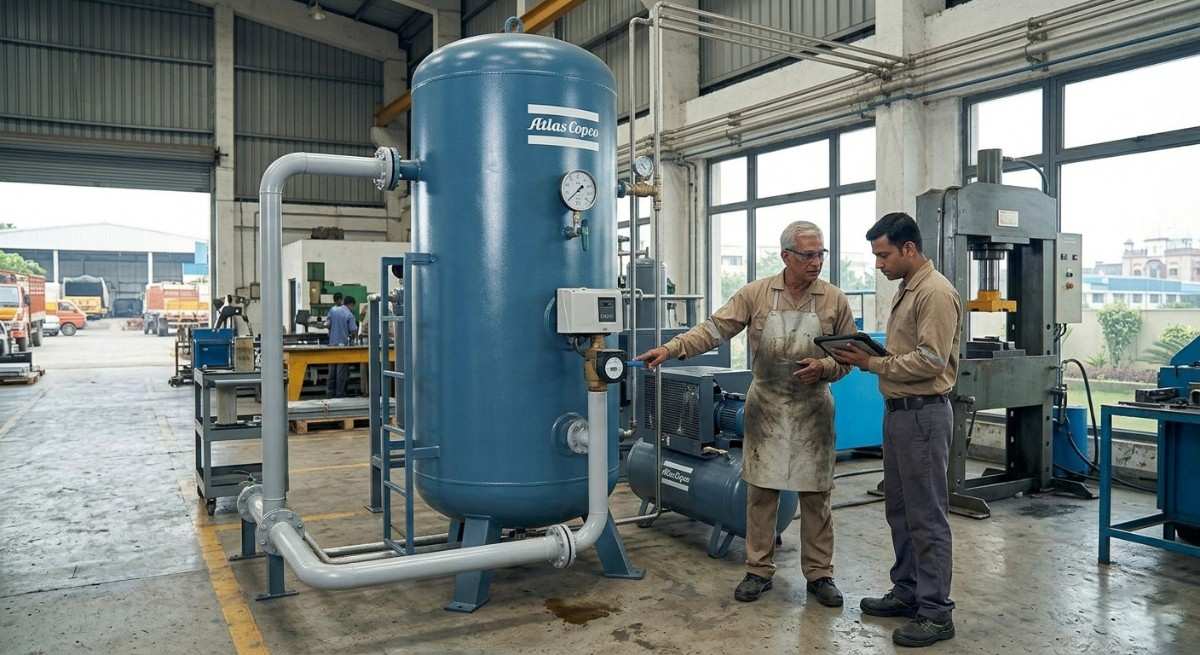
A compressed air receiver, also commonly called an air receiver tank or compressed air storage vessel, is a pressure vessel designed to store a volume of compressed air produced by your compressor and release it steadily to your downstream distribution system and equipment.
It sits between your compressor and your air distribution network and acts as the central buffer between air supply and air demand in your system.
Think of it this way. Your compressor produces compressed air in a specific pattern based on its design and control settings. Your production floor uses compressed air in a completely different pattern based on when tools are activated, machines cycle, and processes demand air.
These two patterns are almost never perfectly matched. Sometimes demand is higher than what the compressor can instantly supply. Sometimes the compressor is producing more air than the system currently needs.
The compressed air receiver bridges this gap. It absorbs the excess air when supply exceeds demand and releases stored air when demand exceeds the compressor's immediate output. This buffering function is fundamental to the reliable and efficient operation of any compressed air system.
How a Compressed Air Receiver Works
Understanding the working principle of a compressed air receiver helps you appreciate the value it brings to your entire compressed air system.
When your compressor runs it produces compressed air at a pressure above your system's operating pressure. This excess air flows into the receiver tank and the pressure inside the tank rises.
When your system pressure reaches the compressor's cut-out pressure the compressor stops running or unloads. The compressed air stored in the receiver tank then supplies your downstream demand while the compressor is off.
As air is drawn from the tank the pressure inside it gradually falls. When the pressure drops to the compressor's cut-in pressure the compressor starts again and the cycle repeats.
The receiver tank is what makes this on-off cycle possible. Without adequate storage volume the pressure would drop too rapidly during demand periods and the compressor would need to start and stop far too frequently to maintain system pressure.
This frequent starting and stopping is called short cycling and it is one of the most damaging operating conditions for a compressor motor and its associated components. A correctly sized compressed air receiver prevents short cycling by providing enough storage volume to keep the pressure stable between compressor cycles.
The Key Functions of a Compressed Air Receiver in Your System
A compressed air receiver performs several important functions simultaneously in a well-designed compressed air system. Here is a clear explanation of each one.
Air Storage and Demand Buffering
This is the primary function. The receiver stores compressed air during periods when the compressor output exceeds system demand and releases it during periods when demand exceeds compressor output. This buffering keeps system pressure stable and ensures a consistent air supply to all connected equipment regardless of fluctuations in demand.
Compressor Protection Through Short Cycle Prevention
Every time a compressor motor starts it draws a surge of electrical current several times higher than its normal running current. Frequent starts place enormous stress on the motor windings, starter contacts, and mechanical components. They also consume significantly more energy than steady running operation.
A correctly sized compressed air receiver reduces the frequency of compressor starts by providing enough air storage to extend the off period between cycles. This protects the compressor motor, reduces electrical stress on your supply, and significantly extends the operational life of the entire machine.
Primary Moisture Separation
As hot compressed air from the compressor enters the relatively cooler receiver tank it slows down and cools. This cooling causes water vapour in the air to condense into liquid water which falls to the bottom of the tank.
While the receiver is not a substitute for a properly specified air dryer it does remove a meaningful amount of free moisture from the compressed air before it enters your distribution system. This reduces the moisture load on your downstream filtration and drying equipment.
Pressure Pulsation Dampening
Piston compressors produce compressed air in distinct pulses with each stroke of the piston. These pressure pulsations travel through the air system and can cause vibration, noise, and inconsistent performance in sensitive pneumatic equipment.
A compressed air receiver absorbs and dampens these pressure pulsations and delivers smooth steady air pressure to your distribution system. This is particularly important in systems powered by reciprocating piston compressors.
Peak Demand Support
Many industrial processes have periodic high demand events that temporarily exceed the compressor's delivery capacity. Automated machinery cycles, pneumatic clamping operations, and air-powered actuators that activate simultaneously can all create short bursts of very high air demand.
A properly sized compressed air receiver handles these peak demand events by releasing stored air to supplement the compressor's output during the surge. This prevents pressure drops that would otherwise affect the performance of every tool and machine connected to the system.
Emergency Air Reserve
In the event of a compressor trip or unexpected shutdown the compressed air stored in the receiver provides a short-term reserve that allows controlled shutdown of processes and prevents immediate production disruption. In some critical applications this reserve capacity is a specific design requirement.
Types of Compressed Air Receivers Available in India
Compressed air receivers are available in several configurations to suit different installation requirements and space constraints.
Vertical Air Receivers
Vertical receivers are the most common configuration in Indian industrial facilities. They have a smaller floor footprint than horizontal models of equivalent capacity making them suitable for compressor rooms where floor space is limited. The vertical orientation also promotes natural moisture separation and drainage.
Horizontal Air Receivers
Horizontal receivers are used where height is restricted or where the receiver needs to be integrated into a specific layout. They are commonly used as base-mounted receivers under packaged compressor systems. Moisture drainage from horizontal tanks requires careful attention to ensure condensate does not accumulate and cause corrosion.
Wet Receivers
A wet receiver is installed between the compressor and the air treatment equipment. It receives hot wet air directly from the compressor and provides primary moisture separation and pressure buffering before the air passes through the dryer and filtration system.
Dry Receivers
A dry receiver is installed downstream of the air treatment equipment. It stores clean dry treated air close to the point of use and provides an additional buffer for peak demand events. Dry receivers are commonly used in facilities with complex distribution systems or multiple production areas with independent demand profiles.
Some well-designed systems use both a wet receiver upstream of the treatment equipment and a dry receiver downstream for maximum buffering and air quality assurance.
How to Size a Compressed Air Receiver Correctly
Incorrect sizing is one of the most common mistakes made when specifying compressed air receivers for Indian industrial facilities. Both undersizing and oversizing create problems that affect system performance and operational costs.
The Standard Sizing Guideline
The widely accepted industry guideline for receiver sizing is a minimum storage volume of six to ten times the compressor's free air delivery per minute.
For example if your compressor delivers 20 CFM of free air the minimum recommended receiver volume is between 120 and 200 litres. This provides sufficient storage to maintain stable pressure between compressor cycles under typical demand conditions.
Factors That Require Larger Receiver Volume
Several operating conditions indicate that a larger receiver is needed beyond the standard guideline.
Systems with high peak demand events benefit from additional storage volume to handle demand surges without pressure drop. Systems where the compressor serves multiple independent production areas with potentially simultaneous demand peaks need more buffer capacity. Systems with variable demand profiles where consumption fluctuates significantly throughout the shift need larger receivers to stabilise pressure effectively.
Planning for Future Expansion
Many Indian manufacturing facilities expand their production capacity over time. When sizing a compressed air receiver it is worth considering your anticipated growth over the next three to five years and specifying a receiver with sufficient capacity to accommodate this expansion. Adding receiver capacity after installation is straightforward but requires additional capital expenditure and installation work that could have been avoided with slightly more forward thinking at the initial specification stage.
Multiple Receiver Configurations
Larger industrial facilities sometimes use multiple receivers rather than a single large vessel. This approach offers flexibility in system layout, allows different sections of the facility to have independent buffering, and provides redundancy so that one receiver can be taken out of service for inspection or maintenance without shutting down the entire compressed air system.
Why Compressed Air Receivers Are Mandatory in Indian Industrial Settings
India's industrial operating environment creates specific conditions that make a correctly sized and maintained compressed air receiver particularly important.
Power Supply Variability
Power supply quality varies across industrial areas in India. Voltage fluctuations and supply interruptions are more common in some regions than in others. A well-sized compressed air receiver provides a stored air reserve that allows production processes to continue briefly during momentary supply interruptions and gives operators time for controlled shutdowns when longer outages occur.
High Ambient Humidity
India's high humidity climate means compressed air systems carry significant moisture loads for much of the year. The primary moisture separation function of the receiver tank helps reduce the burden on downstream dryers and filters and contributes to better overall air quality across the system.
Diverse Application Demands
Indian manufacturing facilities often run multiple different applications from the same compressed air system. Pneumatic tools, automated machinery, spray systems, and instrumentation all operate simultaneously with very different demand profiles. A properly sized receiver buffers these varied demands and keeps pressure stable across all applications.
Protection of Compressor Investment
Compressors represent a significant capital investment for any Indian industrial facility. Protecting this investment through correct receiver sizing that prevents short cycling and reduces motor stress is a straightforward and cost-effective way to extend compressor life and reduce lifetime maintenance costs.
Maintenance Essentials for Your Compressed Air Receiver
A compressed air receiver is a pressure vessel and like all pressure vessels it requires regular maintenance to operate safely and reliably.
Daily Condensate Draining
Condensate accumulates at the bottom of the receiver tank during normal operation. This condensate must be drained daily to prevent it from rising to the level of the air outlet and carrying moisture into the distribution system. If a manual drain valve is fitted this must be opened and closed as part of the daily maintenance routine. An automatic drain valve eliminates the need for manual draining and ensures consistent condensate removal regardless of operator availability.
Regular External Inspection
Inspect the external surface of the receiver tank regularly for signs of corrosion, paint degradation, or physical damage. Pay particular attention to weld seams, fittings, and the bottom of the tank where moisture tends to collect. Catch any developing corrosion early before it penetrates to the tank wall.
Safety Valve Testing
The safety relief valve on your compressed air receiver is the critical last line of defence against overpressure. Test it manually by briefly operating the test lever at least every three months to confirm it is not seized and will operate correctly in an emergency situation.
IBR Inspection Compliance
In India compressed air receivers are classified as pressure vessels under the Indian Boiler Regulations. IBR inspections by an authorised inspector are required at prescribed intervals. Always keep your IBR certification documents current and schedule inspections in advance to maintain continuous compliance.
Ultrasonic Wall Thickness Testing
Internal corrosion reduces the wall thickness of the receiver over time. Ultrasonic thickness testing performed during the annual inspection reveals the actual internal condition of the tank and determines whether remaining wall thickness is within safe operating limits. This testing is the most reliable early warning system for internal corrosion that is not visible from the outside.
Common Mistakes Indian Buyers Make When Selecting a Compressed Air Receiver
Buying the Smallest Available Size to Save Cost
An undersized receiver forces the compressor to short cycle, increases motor stress, raises energy consumption, and shortens compressor life. The cost of premature compressor failure far exceeds any initial saving on a larger receiver vessel.
Ignoring IBR Certification Requirements
Compressed air receivers used in India must comply with IBR regulations. Purchasing a non-certified vessel to save cost creates serious safety and legal liability risks. Always confirm IBR certification before purchasing any compressed air receiver.
Installing Without an Automatic Drain Valve
Manual drain valves are only as reliable as the operator who operates them. Missed or delayed draining allows condensate to accumulate, increases internal corrosion rate, and allows moisture to carry over into the distribution system. An automatic drain valve is a small investment that ensures reliable condensate removal under all operating conditions.
Not Accounting for Future Expansion
Specifying a receiver that is exactly right for today's demand without any allowance for future growth means the system will be undersized as soon as production expands. Build in a reasonable expansion margin at the initial specification stage.
Neglecting Regular Inspection
A compressed air receiver that is never inspected is a safety risk that increases over time. Internal corrosion, wall thinning, and fitting degradation all develop gradually and are undetectable without proper inspection. Regular professional inspection is not optional for a pressure vessel in continuous industrial service.
Frequently Asked Questions About Compressed Air Receivers
Q1. What is the difference between a wet receiver and a dry receiver?
A wet receiver is installed between the compressor and the air treatment equipment. It receives hot wet compressed air directly from the compressor and provides primary moisture separation and pressure buffering before the air enters the dryer and filter system. A dry receiver is installed downstream of the air treatment equipment and stores clean treated compressed air. It provides additional buffering close to the point of use and helps manage peak demand events without affecting air quality.
Q2. How do I know if my compressed air receiver is the right size for my system?
The standard guideline is a minimum receiver volume of six to ten times your compressor's free air delivery per minute. If your compressor is short cycling frequently, if system pressure drops significantly during peak demand events, or if pressure is unstable during normal operation, your receiver is likely undersized. A qualified compressed air specialist can calculate the correct receiver size for your specific system and demand profile.
Q3. Does a compressed air receiver need to be IBR certified in India?
Yes. Compressed air receivers are classified as pressure vessels under the Indian Boiler Regulations and must be manufactured, tested, and certified in accordance with IBR requirements. Always confirm IBR certification when purchasing a compressed air receiver in India. Operating an uncertified pressure vessel creates serious safety risks and legal liability.
Q4. Can I add a second receiver to my existing compressed air system?
Yes. Adding a second receiver to an existing system is a straightforward way to increase buffer capacity without replacing the existing vessel or upgrading the compressor. A second receiver can be installed in parallel with the existing one or positioned as a dry receiver downstream of your air treatment equipment. This approach is often more cost effective than replacing a correctly functioning existing receiver with a larger one.
Q5. How long does a compressed air receiver last?
A well-maintained compressed air receiver manufactured from quality materials and operated within its design parameters can provide fifteen to twenty years or more of reliable service. The most significant factor affecting service life is internal corrosion caused by accumulated condensate. Daily draining, regular inspection, and professional IBR inspections at prescribed intervals are the key practices that maximise receiver service life.
Q6. What pressure rating should my compressed air receiver have?
Your compressed air receiver should be rated for a maximum allowable working pressure that is equal to or greater than the maximum pressure your compressor can produce. In most industrial applications in India this means a pressure rating of 10 to 16 bar. Always confirm the pressure rating requirement with your compressor specification before purchasing a receiver vessel.
Q7. Is an automatic drain valve really necessary on a compressed air receiver?
Yes. Manual drain valves depend entirely on operator discipline to function correctly. In busy industrial environments daily draining is frequently missed or delayed. An automatic drain valve removes condensate reliably on every cycle without any operator involvement. The cost of an automatic drain valve is minimal compared to the cost of internal corrosion and moisture contamination caused by inconsistent manual draining.
Why Times Marketing Is Your Trusted Partner for Compressed Air Receivers in India
At Times Marketing we supply IBR certified compressed air receivers across a full range of capacities and pressure ratings to suit every industrial application in India.
Whether you need a standard vertical receiver for a workshop compressor installation, a large horizontal vessel for a multi-compressor industrial system, or a specialist high-pressure receiver for a specific application, our team can source and supply the right vessel for your requirements.
Every receiver we supply meets IBR certification requirements and comes with full documentation for regulatory compliance. We also supply complete compressed air system components including compressors, air dryers, filtration systems, and automatic drain valves so you can build or upgrade your entire compressed air system through one trusted partner.
Our technical team is available to help you calculate the correct receiver size for your system, advise on installation requirements, and support you with ongoing maintenance guidance throughout the life of your equipment.
Conclusion
A compressed air receiver is not an optional add-on to your compressed air system. It is a fundamental component that buffers supply and demand, protects your compressor from short cycling, separates primary moisture, dampens pressure pulsations, and provides the peak demand support and emergency reserve that keep your operations running reliably.
Getting the right receiver specification from the beginning, maintaining it properly throughout its service life, and keeping it IBR compliant are the three things that ensure it delivers everything it is designed to do for your facility.
Times Marketing is ready to help you get every one of these decisions right. Contact our team today and let us help you specify, supply, and support the right compressed air receiver solution for your business.