
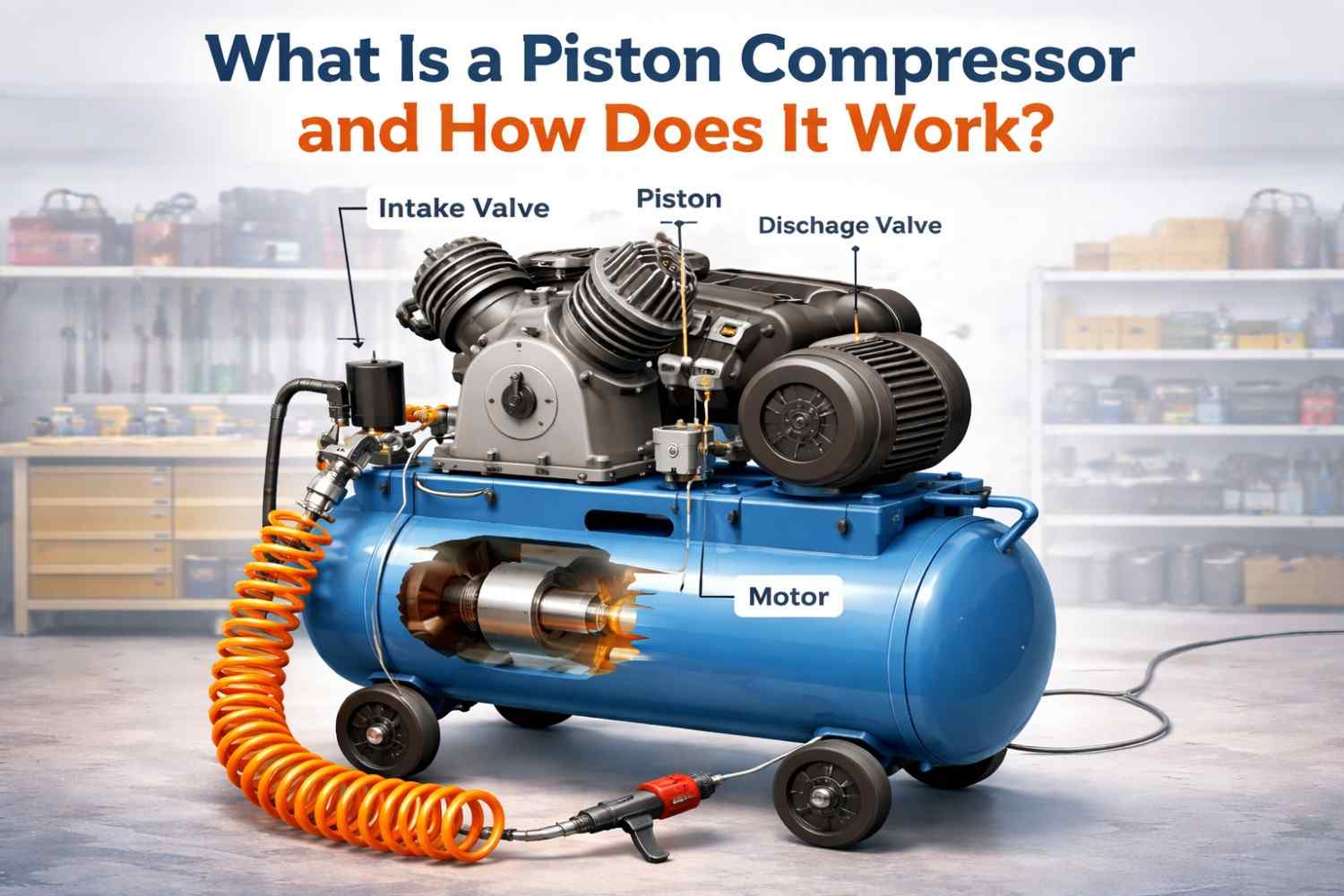
Compressed air plays an important role in many industries, workshops, healthcare systems, and even small businesses. One of the most commonly used machines for creating compressed air is the Piston Compressor. Whether it is used in a manufacturing plant or in a medical setup as a piston compressor nebulizer, this equipment is known for its reliability and performance.
At Times Marketing Pvt Ltd, many customers ask a simple question — what exactly is a piston compressor and how does it work? If you are planning to invest in an air compressor or simply want to understand the technology behind it, this guide will help you understand everything in a simple way.
What Is a Piston Compressor?
A Piston Compressor is a type of air compressor that uses a piston to compress air inside a cylinder. It is also commonly known as a reciprocating piston compressor because the piston moves back and forth in a reciprocating motion.
The machine draws atmospheric air into a cylinder, compresses it by reducing its volume, and then delivers the compressed air for industrial or commercial use.
This compressor is widely used because it is:
- Easy to maintain
- Cost-effective
- Durable
- Suitable for high-pressure applications
- Available in different sizes for various industries
At Times Marketing Pvt Ltd, piston compressors are often recommended for businesses that need reliable compressed air without a complicated system.

Understanding the Piston Compressor Working Principle
To understand the machine better, it helps to know the piston compressor working principle.
The working process happens in simple steps:
1. Air Intake
When the piston moves downward inside the cylinder, it creates a vacuum.
This vacuum pulls outside air into the cylinder through an intake valve.
2. Compression
As the piston moves upward, the air inside the cylinder gets compressed because the available space becomes smaller.
3. Air Discharge
Once the pressure reaches the required level, the discharge valve opens and the compressed air moves into the storage tank.
4. Repeat Cycle
The piston continues moving up and down repeatedly to produce continuous compressed air.
This simple mechanism makes the Piston Compressor one of the most trusted compressor types in many industries.
Main Components of a Piston Compressor
A piston compressor contains several important parts that work together.
Cylinder
The cylinder is the chamber where air gets compressed.
Piston
The piston for air compressor moves inside the cylinder to compress air.
Crankshaft
The crankshaft converts motor rotation into piston movement.
Intake Valve
This valve allows atmospheric air to enter.
Discharge Valve
This valve releases compressed air into the tank.
Motor
The electric motor powers the compressor.
Air Receiver Tank
Stores compressed air for later use.
At Times Marketing Pvt Ltd, quality components are important because they improve machine life and performance.
Types of Piston Compressors
There are different types of piston compressors available depending on usage.
Single-Stage Piston Compressor
In a single-stage model:
- Air is compressed once
- Suitable for low-pressure applications
- Common in small workshops
Used for:
- Painting
- Tire inflation
- Small tools
Two-Stage Piston Compressor
In a two-stage model:
- Air is compressed in two cylinders
- Produces higher pressure
- Better for industrial use
Used for:
- Manufacturing plants
- Heavy machinery
- Continuous operations
Oil-Lubricated Piston Compressor
These compressors use oil for lubrication.
Benefits:
- Longer life
- Better cooling
- Heavy-duty performance
Oil-Free Piston Compressor
An Oil-free piston compressor does not require lubrication in the compression chamber.
Benefits:
- Clean air output
- Less maintenance
- Suitable for sensitive applications
Used in:
- Food industry
- Pharmaceutical units
- Hospitals
- Laboratories
Times Marketing Pvt Ltd often recommends oil-free systems for businesses that need contamination-free air.
What Is a Reciprocating Piston Compressor?
A reciprocating piston compressor is simply another name for a piston compressor because the piston moves in a back-and-forth motion.
The term "reciprocating" refers to:
- Forward movement
- Backward movement
- Continuous compression cycle
These compressors can handle:
- High pressure
- Intermittent operation
- Industrial demand
They are commonly used because they are dependable and efficient.

How the Piston for Air Compressor Works
The piston for air compressor is the heart of the machine.
Its role includes:
- Drawing in air
- Compressing air
- Releasing compressed air
The piston is usually made from:
- Cast iron
- Aluminum
- Steel alloys
A well-built piston helps improve:
- Efficiency
- Durability
- Energy savings
At Times Marketing Pvt Ltd, durable compressor parts are important for long-term performance.
Where Piston Compressors Are Used
Piston compressors are used in many industries.
Manufacturing Plants
Used for:
- Pneumatic tools
- Packaging machines
- Automation systems
Automotive Workshops
Used for:
- Tire inflation
- Spray painting
- Air tools
Medical Equipment
A piston compressor nebulizer uses the same compression principle to convert medicine into mist.
Food Industry
An Oil-free piston compressor provides clean compressed air.
Construction Sites
Portable compressors power tools on site.
What Is a Piston Compressor Nebulizer?
A piston compressor nebulizer is a small medical device that uses compressed air to turn liquid medicine into a fine mist.
How it works:
- Compressor generates airflow
- Air passes through medicine chamber
- Liquid medicine turns into vapor
- Patient inhales the mist
Benefits:
- Easy to use
- Reliable
- Suitable for home and clinics
The same piston compressor working principle is used on a smaller scale.
Advantages of Piston Compressors
A Piston Compressor offers several advantages.
Affordable
Lower initial cost than many other compressors.
High Pressure
Can generate higher pressure when needed.
Easy Maintenance
Simple design means easier servicing.
Long Life
Strong construction gives durability.
Flexible Use
Available for small and large applications.
At Times Marketing Pvt Ltd, these benefits make piston compressors a preferred choice.
Disadvantages of Piston Compressors
Like every machine, there are some limitations.
Noisy Operation
Piston movement creates more noise.
Heat Generation
Compression can create heat.
Intermittent Use
Some models need rest periods.
More Vibrations
Reciprocating motion can create vibration.
Proper installation reduces these issues.
How to Maintain a Piston Compressor
Regular maintenance keeps your machine efficient.
Check Air Filters
Dirty filters reduce performance.
Inspect the Piston
Check the piston for air compressor for wear.
Drain Moisture
Remove water from the tank regularly.
Check Valves
Ensure intake and discharge valves work properly.
Inspect Belts
Loose belts can reduce efficiency.
Replace Parts on Time
Prevent major failures with timely service.
Times Marketing Pvt Ltd supports customers with proper compressor maintenance guidance.
How to Choose the Right Piston Compressor
Before buying, consider these points.
Air Requirement
Know your required airflow.
Pressure Requirement
Check PSI needs.
Usage Frequency
Continuous or occasional use?
Oil-Free Need
Choose Oil-free piston compressor for clean air.
Space Available
Select suitable size.
Power Supply
Single-phase or three-phase?
Choosing the right system saves money and improves performance.
Why Businesses Choose Times Marketing Pvt Ltd
At Times Marketing Pvt Ltd, customers trust us because we provide:
- Quality compressor solutions
- Reliable brands
- Technical support
- Genuine spare parts
- Professional guidance
- Customized recommendations
We help businesses choose the right Piston Compressor based on their specific needs.
Final Thoughts
A Piston Compressor is one of the most dependable machines for compressed air generation. The piston compressor working principle is simple yet highly effective, making it useful in industrial, commercial, and medical applications.
Whether you need a reciprocating piston compressor, a piston compressor nebulizer, or an Oil-free piston compressor, understanding how the system works helps you make a better decision.
If you are looking for reliable air compressor solutions, Times Marketing Pvt Ltd can help you find the right compressor for your business with expert support and trusted service.